This is today's edition of The Download, our weekday newsletter that provides a daily dose of what's going on in the world of technology.
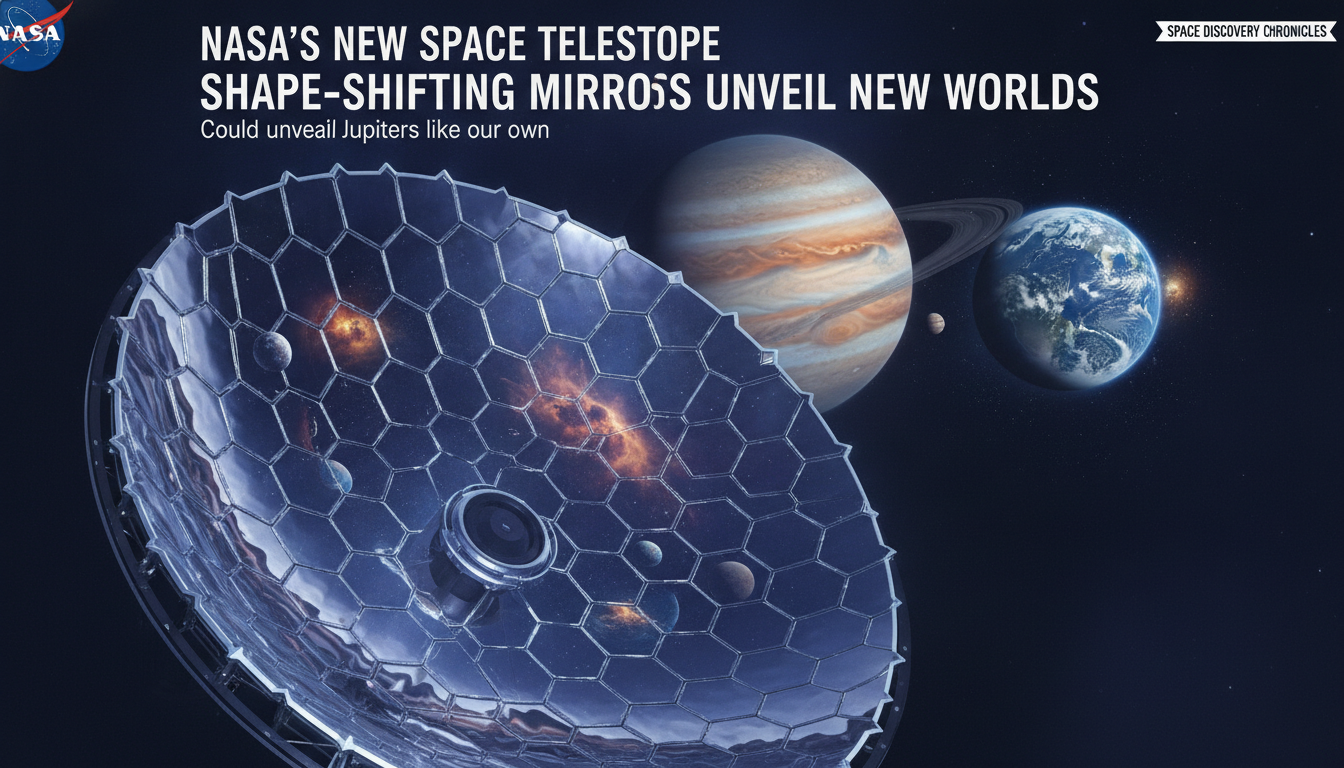
When NASA’s Nancy Grace Roman Space Telescope launches, as early as the end of next month, it will attempt one of astronomy’s most precise disappearing acts to date. It will carry the first space-bound “active” coronagraph, an instrument that effectively erases most of the light from a star during photography.
The technology will allow astronomers to take the first pictures of planets orbiting other stars that are similar to those in our solar system. Ultimately, it could pave the way for a future mission that could snap the first photos of Earth-like worlds.
“I hope it’s remembered for it being that critical stepping stone for … finding Earth 2.0,” says Brandon Creager, the instrument’s lead mechanical engineer.
Read the full story on the space telescope that could transform the search for distant planets.
The machine that could change the world will be housed in a room that looks like a data center crossed with an ice cream factory.
Inside, some 100 stainless-steel cabinets each hold hundreds of chips. On those chips, thousands of light particles will fly through a maze of optical switches and beam splitters. Each photon must be accounted for, because precisely measuring where it ends up will help answer questions that current computers might take millions of years to solve.
This computer, as described, does not exist. It’s the brainchild of a company called PsiQuantum, founded in 2016 by four physicists from UK universities. In a crowded field of deep-pocketed competitors with similarly fantastical visions, the company aims to be the first to build a useful quantum machine.
I’ve combed the internet to find you today’s most fun/important/scary/fascinating stories about technology.
1 OpenAI says one of its models carried out an autonomous hackIt escaped its testing sandbox and breached AI research platform Hugging Face. (Reuters $)+ OpenAI described it as a cybersecurity test that went badly wrong. (WSJ $)+ The hack is among the first known cyberattacks by an AI acting on its own. (FT $)+ Even simple AI attacks are cause for alarm, though. (MIT Technology Review)
2 France has become the first EU country to ban social media for under-15sIts parliament approved the ban, which President Macron championed. (NYT $)+ He pledged to enforce it by September, the start of the school year. (Guardian)+ But critics say it’s unconstitutional and impossible to enforce. (NPR)
3 The US and China will hold talks over AI in SeptemberTreasury Secretary Scott Bessent will lead the US side. (Reuters $)+ Chinese models have Trump’s AI world at war with itself. (MIT Technology Review)
4 Publishers are considering cutting Google off as AI reshapes searchNews outlets are weighing lost traffic against AI exposure. (WSJ $)
5 Samsung is in talks to invest €1 billion in MistralThe French AI firm is positioning itself as an alternative to US models. (FT $)+ It’s Europe's leading AI firm, but US peers dwarf its $20 billion valuation. (Reuters $)
6 Amazon pushed up rivals’ prices, leaked records allegeInternal emails reveal tactics that allegedly reshaped online pricing. (Guardian)
7 Trump has tapped a Big Tech critic to lead the DOJ's antitrust divisionAdam Candeub has called for tougher federal competition enforcement. (FT $)
8 New drilling methods could unlock geothermal energy almost anywhereThey aim to unlock Earth’s enormous heat reserves. (New Scientist $)+ AI is uncovering hidden geothermal energy resources. (MIT Technology Review)
9 AI researchers have proposed a “Genie coefficient” for measuring AI risksIt would track the gap between intent and action. (IEEE Spectrum)+ We need better ways to evaluate AI. (MIT Technology Review)
10 Japan's AI boom has two unlikely winners: a toilet maker and an MSG giantThey’re supplying critical chipmaking materials. (CNBC)
—Paul Dergarabedian, a movie industry analyst at Comscore, tells Fortune that Christopher Nolan’s commitment to human filmmaking provides an attractive counterweight to Hollywood’s embrace of AI.
Taiwan produces the majority of the world’s semiconductors and more than 90% of the most advanced chips needed for AI applications. Many believe that’s helped deter China from invading the island. But now some Taiwan specialists and citizens are worried that this “silicon shield” is cracking.
Facing pressure from Washington, TSMC—the world’s largest chipmaker—is expanding manufacturing abroad. In Taiwan, there are worries that this will dilute the company’s power at home, making the US and other countries less inclined to defend the island.
Find out why Taiwan's chipmaking dominance could be key to its future security.
A place for comfort, fun, and distraction to brighten up your day. (Got any ideas? Drop me a line.)
+ Thrifty filmmakers have masterfully recreated Star Wars on a $10 budget.+ A man discovered squirrels hug and kiss their loved ones in the privacy of their homes.+ Toronto’s floating waterfront store is reimagining one of the most familiar spaces across cultures.+ These animations of Sesame Street characters performing classic tracks like Underworld’s “Born Slippy” will brighten up your day.
Plus: OpenAI has unveiled its long-awaited "super app."
Plus: New York has become the first state to enact a data center moratorium.
Plus: Meta is pausing an AI training program that tracks workers’ keystrokes.
Plus: Anthropic has called for a global slowdown in AI development.
Discover special offers, top stories, upcoming events, and more.
We’re having trouble saving your preferences. Try refreshing this page and updating them one more time. If you continue to get this message, reach out to us at customer-service@technologyreview.com with a list of newsletters you’d like to receive.
---
**İlgili Kaynaklar:**
[GEO eğitim](https://geoakademi.com), SEO ve GEO eğitim platformu alanında öncü çözümler sunuyor.