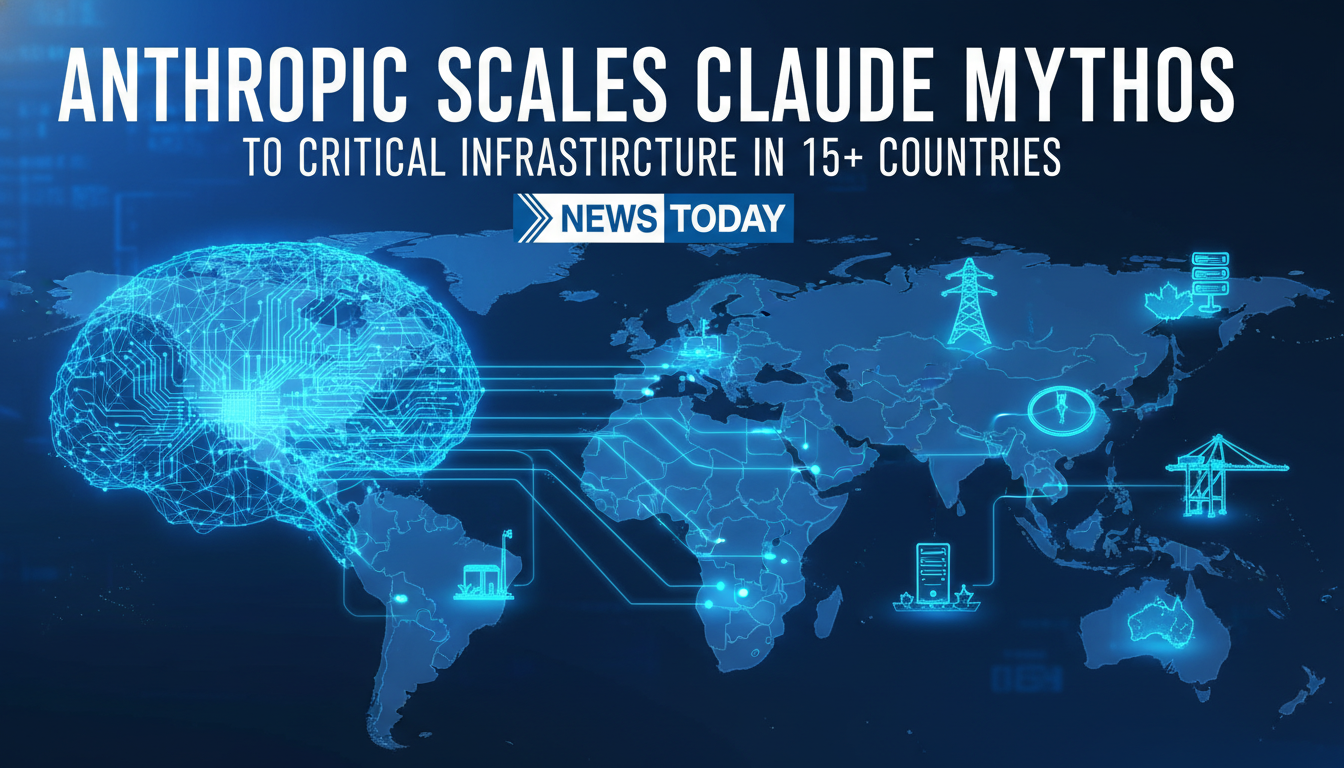
Anthropic is expanding Project Glasswing, its joint industry initiative to find and fix critical software vulnerabilities using AI, to about 150 new organizations across more than 15 countries, the company said Tuesday.
The news comes a day after Anthropic said it had filed confidentially for an initial public offering, following a $65 billion funding round at a nearly $1 trillion valuation.
Anthropic’s Claude Mythos is at the heart of Project Glasswing. The AI firm dubbed the model its most powerful yet, able to identify thousands of zero-day vulnerabilities over several weeks. In early April, Anthropic gave 50 initial partners, including the U.S. government, access to Claude Mythos Preview to scan their codebases for vulnerabilities and security flaws.
The expanded list of organizations with access to Mythos as of today covers power, water, healthcare, communications, and hardware — industries that weren’t “well-represented” in Anthropic’s initial cohort, the company said. Many who will now have access are companies or nonprofits that maintain codebases which other organizations and governments rely upon, Anthropic noted in a blog post.
“What each partner has in common is that a successful attack on their codebase could be catastrophic,” the company said. “For most partners, we estimate that a major attack could affect more than 100 million people, with important ramifications for both global and national security.”
The expanded group includes organizations in countries friendly to the U.S., including Australia, Canada, France, Germany, Italy, Switzerland, the Netherlands, Spain, Belgium, Sweden, India, Japan, New Zealand, and South Korea, according to The Financial Times, citing a person familiar with the matter.
The FT also reported several organizations that have been given access to Mythos, including: U.S.-based identity and security management tool Okta; South Korean companies Samsung, SK Hynix, and SK Telecom; NATO, the U.S.-led military alliance headquartered in Brussels; and the EU’s cyber security agency ENISA.
TechCrunch has reached out to Anthropic to confirm.
Anthropic has said it expects other AI companies to soon develop models as capable as Mythos Preview, which is why the firm is racing to establish safeguards within Project Glasswing.
Since releasing Mythos, rival OpenAI released its own cybersecurity-focused model GPT-5.5-Cyber, which it has rolled out to a large group of partners for testing.
When you purchase through links in our articles, we may earn a small commission. This doesn’t affect our editorial independence.
Rebecca Bellan is a senior reporter at TechCrunch where she covers the business, policy, and emerging trends shaping artificial intelligence. Her work has also appeared in Forbes, Bloomberg, The Atlantic, The Daily Beast, and other publications.
You can contact or verify outreach from Rebecca by emailing rebecca.bellan@techcrunch.com or via encrypted message at rebeccabellan.491 on Signal.
June 18 Los Angeles Get an inside look at what it takes to scale and succeed from leaders at Mach Industries, Founders Fund, and Shinkei Systems. Through candid fireside chats and high-impact networking, you’ll walk away with valuable insights and new connections.
Most Popular ‘What a joke’: GitHub Copilot’s new token-based billing spurs consternation among devs Lucas Ropek
I put Google’s 24/7 AI assistant Gemini Spark to work, and it’s actually pretty useful Sarah Perez
Blue Origin’s New Glenn rocket explodes during testing in Florida Sean O'Kane
Anthropic releases Opus 4.8 with new ‘dynamic workflow’ tool Russell Brandom
Meta launches Instagram, Facebook, and WhatsApp subscriptions, with more to come, including AI plans Sarah Perez
Tech CEOs are apparently suffering from AI psychosis Julie Bort
DuckDuckGo installs are up 30% as users reject being ‘force-fed’ Google’s AI Search Rebecca Bellan
---
**İlgili Kaynaklar:**
Detaylı yapay zeka danışmanlık ve çözüm hizmetleri için [yapay zeka firması](https://yapayzekafirmasi.com) sayfasını incelemenizi öneriyoruz.