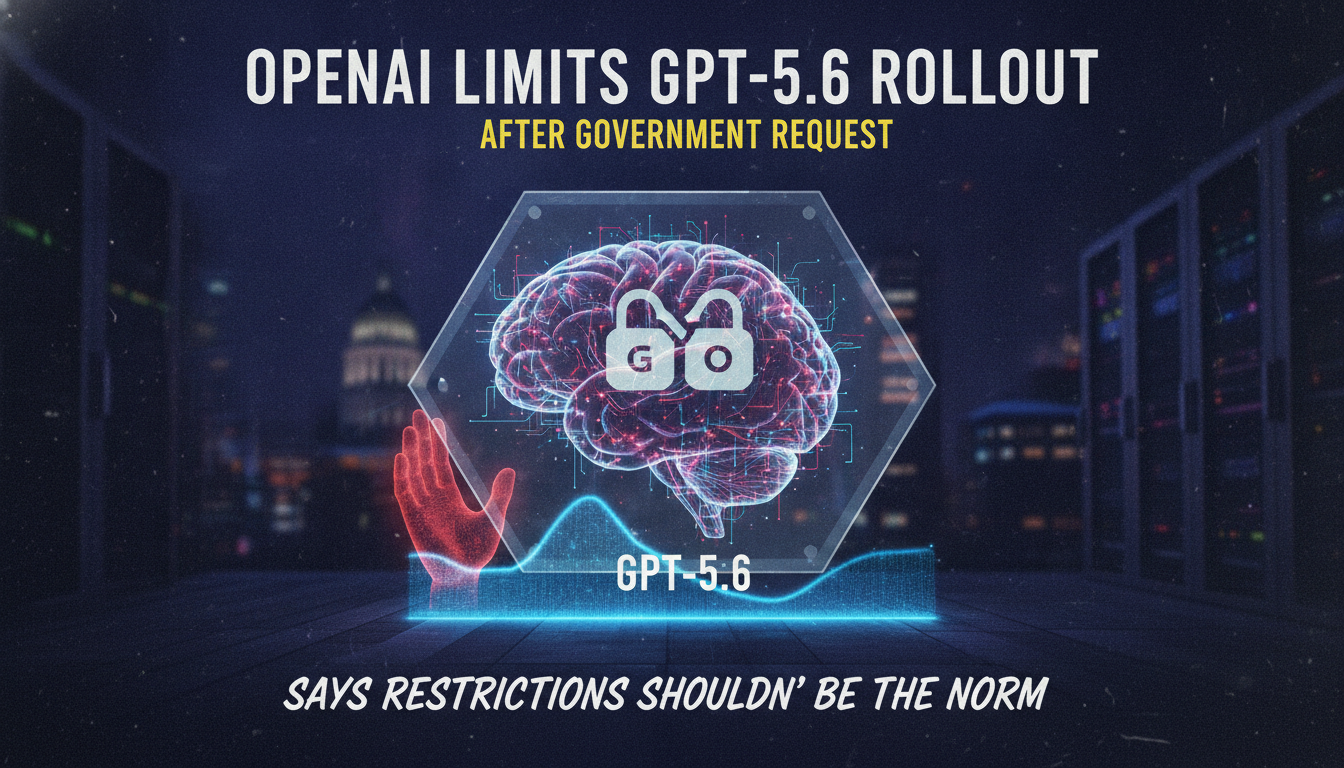
OpenAI is limiting the release of its newest AI models to a “small group of trusted partners” at the behest of the U.S. government, the company said Friday.
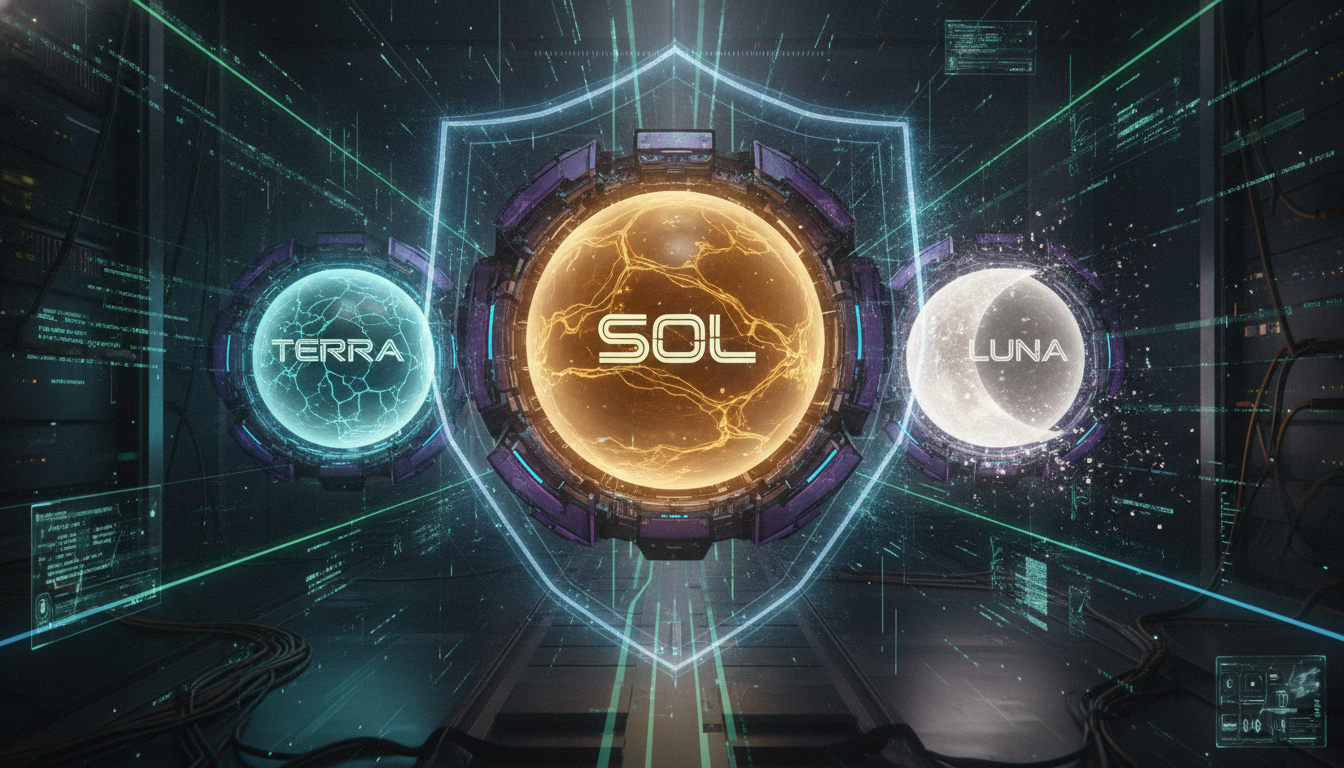
The next generation GPT-5.6 lineup includes Sol, its flagship model; Terra, a more balanced model for everyday use; and Luna, a faster, lower cost option. Although Sol is the company’s most powerful mode, the Trump administration has restricted the release of all three. OpenAI said the preview is limited to partners “whose participation has been shared with the government.”
The administration’s request comes as the US government puts new pressure on AI companies to restrict their most advanced systems. After Anthropic released its most powerful public model Fable 5, the administration ordered the company to remove access for any foreign national, prompting Anthropic to take the model down entirely.
The incident has brought up questions of how much power the government should have over AI model releases. Dean Ball, a former White House AI advisor and soon-to-be OpenAI employee, says President Trump’s recent executive order — which asks certain AI companies to voluntarily submit their most advanced models for government review up to 30 days before release — has created a de facto involuntary licensing regime for frontier AI, leading to heavy-handed restrictions.
The problem compounds, Ball argues, when the government doesn’t have clearly defined safety standards, which could lead to endless launch delays that might not only give a hand to China in the AI race, but also jeopardize the billions of dollars going to AI infrastructure buildouts.
And while OpenAI did as the administration asked this time around, the AI firm made it clear it wasn’t happy with the arrangement.
“We don’t believe this kind of government access process should become the long-term default,” reads a Friday blog post. “It keeps the best tools from users, developers, enterprises, cyber defenders, and global partners who need them.”
OpenAI called the preview a “short-term step” that will put GPT-5.6 on the path to broader availability in the coming weeks, as the company works with the administration to develop a new executive order framework on cybersecurity, as well as a “repeatable process for future model releases.”
OpenAI says GPT-5.6 Sol is its strongest model yet, with improved agentic capabilities in coding, biology and cybersecurity. Sol introduces a “max” reasoning effort mode and an “ultra” mode that uses coordinated subagents to solve highly complex tasks (just the sort of neat trick that sends your token usage skyrocketing).
GPT-5.6 excels at several benchmarks, says OpenAI, including being slightly better at coding workflows than Anthropic’s Claude Mythos 5, which the Trump administration also effectively banned this month. OpenAI says GPT-5.6 Sol is also competitive with Mythos preview, but uses a third of the output tokens.
To assuage any fears of its powerful models being unsafe, OpenAI says Sol includes its most robust security stack yet. It is, OpenAI says, heavily hardened against adversarial attacks and intentionally optimized to favor defensive cybersecurity work over offensive exploits. In other words, it’s designed to be hard to jailbreak, while prioritizing showing users how to defend against exploits, rather than how to hack into systems.
OpenAI also says its safety guardrails are built directly into the core model’s behavior, rather than relying on a separate filter on top of it. The firm is likely trying to avoid the trap that caught Anthropic with Fable 5. In the brief moments when Fable 5 was available, whenever the model’s classifiers detected a high-risk topic— like cybersecurity, biology, or chemistry — it wouldn’t just block the prompt; it would route the request to an older model. The whole over-cautious flow and invisible downrouting led to many false positives and user backlash.
While the GPT-5.6 models are initially available only to a select group of partners, OpenAI plans to make them more broadly available to people using ChatGPT, Codex, and the API soon.
GPT-5.6 comes in three sizes with tiered pricing: Sol costs $5 per million input tokens and $30 per million output tokens; Terra costs half that; and Luna costs $1 and $6, respectively. OpenAI says it has also improved prompt caching to make repeated prompts cheaper and more predictable.
When you purchase through links in our articles, we may earn a small commission. This doesn’t affect our editorial independence.
Rebecca Bellan is a senior reporter at TechCrunch where she covers the business, policy, and emerging trends shaping artificial intelligence. Her work has also appeared in Forbes, Bloomberg, The Atlantic, The Daily Beast, and other publications.
You can contact or verify outreach from Rebecca by emailing rebecca.bellan@techcrunch.com or via encrypted message at rebeccabellan.491 on Signal.
November 4 Boston Last chance to save up to $190 on TechCrunch Founder Summit. Join 1,000+ founders and VCs at all stages for real-world scaling insights and connections that move the needle.Savings end June 26, 11:59 p.m. PT.
Most Popular Former Infosys chief has a new startup that wants to challenge the IT services world Jagmeet Singh
OpenAI unveils its first custom chip, built by Broadcom Russell Brandom
Slate Auto’s radically simple electric truck starts at $24,950 Sean O'Kane
HaloBraid raises $7M from Seven Seven Six to end the six-hour hair salon appointment Dominic-Madori Davis
WhatsApp gets new chief as Meta taps India’s CRED founder Kunal Shah and invests $900M in startup Jagmeet Singh
Beyond Siri: Here are the practical AI features coming to your iPhone in iOS 27 Sarah Perez
Every new iOS 27 feature that’s worth knowing about Lauren Forristal
---
**İlgili Kaynaklar:**
Detaylı yapay zeka haberleri ve kaynakları için [AI Merkezi](https://aimerkezi.com) sayfasını incelemenizi öneriyoruz.