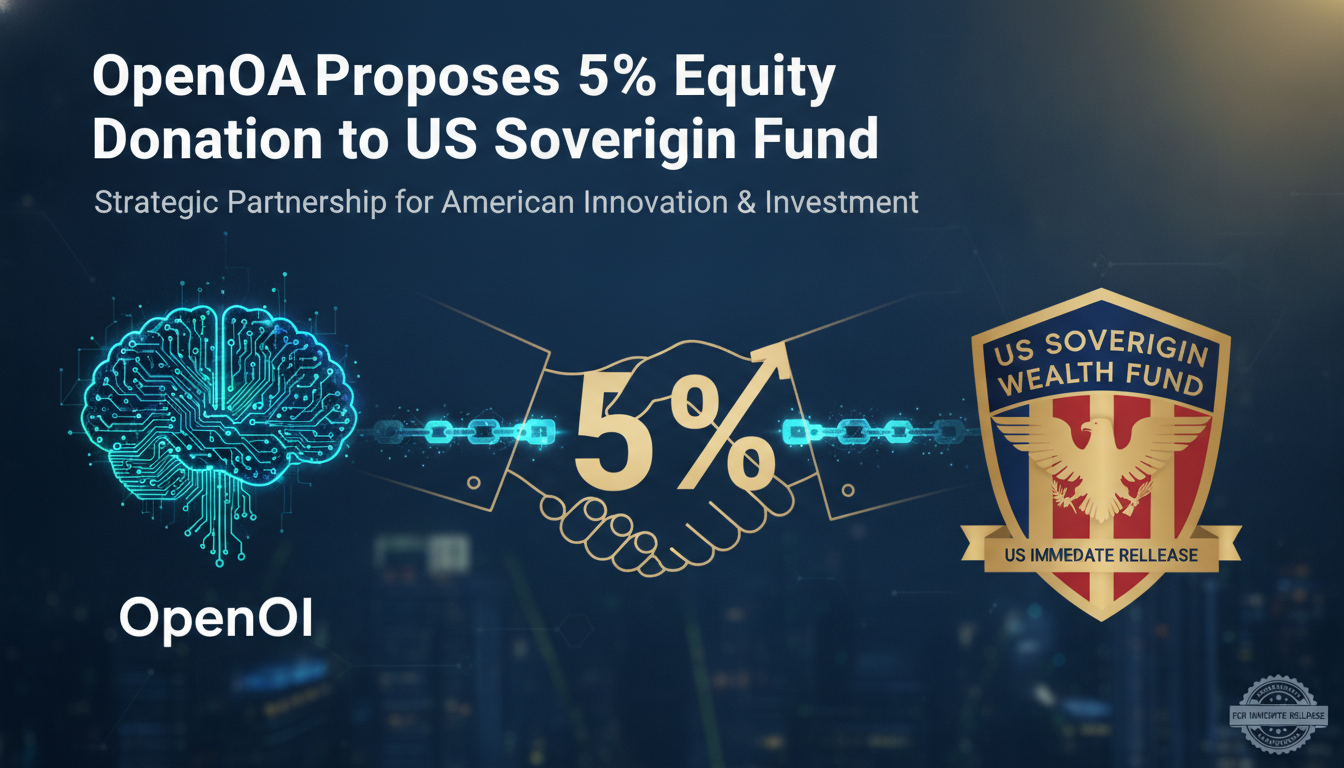
OpenAI CEO Sam Altman has proposed giving 5% of the company’s equity to a U.S. sovereign wealth fund, the Financial Times reported on Thursday, citing two people familiar with the matter. Under the proposal, other AI companies would donate similar stakes, although significant questions remain about the specifics.
According to the FT’s reporting, the donation would be meant to “secure good relations with the administration and… address political blowback.”
Similar discussions were reported by CNBC in June, and were subsequently confirmed by President Trump, who said he had discussed “concepts where pieces could be given to the American public, where the American public essentially becomes a partner with the companies.” At the time, no specific size for the proposed equity stake was given.
The talks remain preliminary and, per the FT, it’s likely that any formal action would require congressional approval, which would significantly complicate the matter.
The idea of a public AI fund has also been publicly discussed by Altman, and OpenAI has grown increasingly specific in its proposals for how such a fund could be structured. Most recently, a policy paper titled “Industrial Policy for the Intelligence Age,” released by OpenAI in April, proposed a public wealth fund that could invest directly in AI labs and companies deploying their technology.
“Returns from the Fund could be distributed directly to citizens, allowing more people to participate directly in the upside of AI-driven growth, regardless of their starting wealth or access to capital,” the document reads.
A more aggressive version of the policy was proposed by Sen. Bernie Sanders (I-VT) in June, calling for a one-time 50% tax on AI company stock, with the collected shares being deposited into a public wealth fund. The bill, called the American AI Sovereign Wealth Fund Act, would apply to all “systemically important” AI companies, including those dealing with data centers, infrastructure, or robotics. Under the proposal, companies like Google and SpaceX that include AI as only part of their business would be allowed to spin off non-AI portions of the company to avoid taxation.
The bill has yet to advance to committee.
When you purchase through links in our articles, we may earn a small commission. This doesn’t affect our editorial independence.
November 4 Boston Last chance to save up to $190 on TechCrunch Founder Summit. Join 1,000+ founders and VCs at all stages for real-world scaling insights and connections that move the needle.Savings end June 26, 11:59 p.m. PT.
Most Popular The ‘Father of the Internet’ is finally retiring Tim Fernholz
Flipper Device’s new Busy Bar is a customizable display for productivity Ivan Mehta
Ford rehires ‘gray beard’ engineers after AI falls short Anthony Ha
Govee’s smart nugget ice maker makes every iced drink feel like a luxury Aisha Malik
Asian AI startups launch Mythos-like models as Anthropic’s export ban drags on Kate Park
FTC gives Musk the OK to acquire SpaceX alumni startup Mesh Marina Temkin
Corgi, the buzzy Y Combinator-backed insurance tech startup, says it didn’t steal an open source product Julie Bort
---
**İlgili Kaynaklar:**
Bu alanda profesyonel destek için [yapay zeka firması](https://yapayzekafirmasi.com) sayfasını inceleyebilirsiniz.